












Ban sought on cryptocurrency ATMs in Middleboro, Lakeville
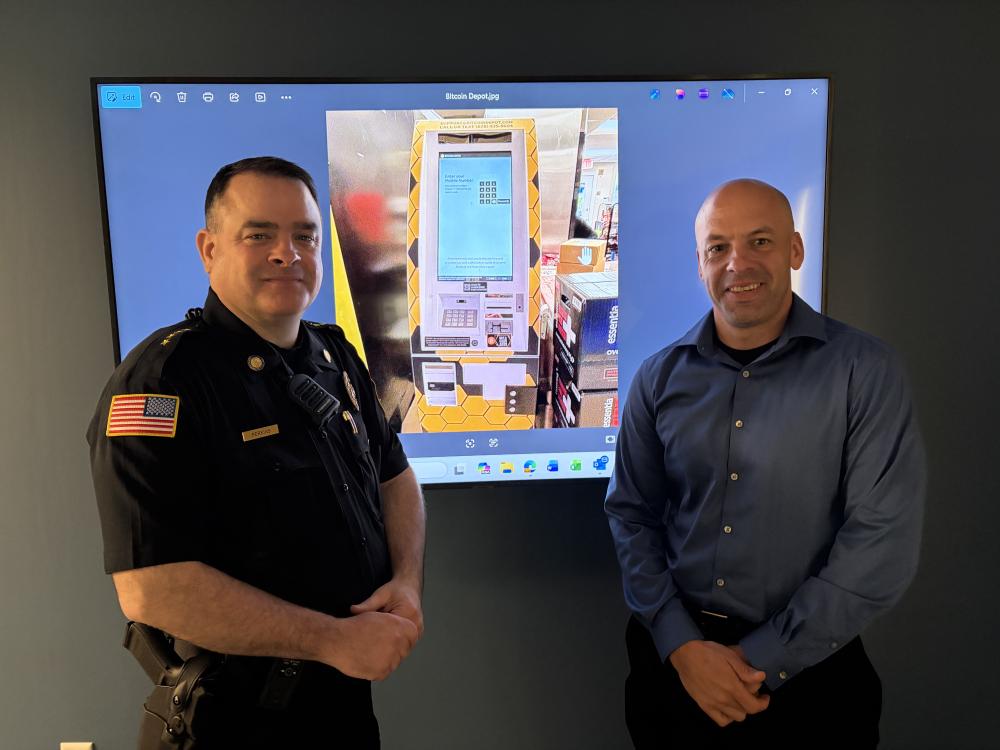 Lakeville Police Chief Matthew Perkins, left, and Officer Jason Orlando with an image of a cryptocurrency machine. Photo by Sandy Quadros Bowles
 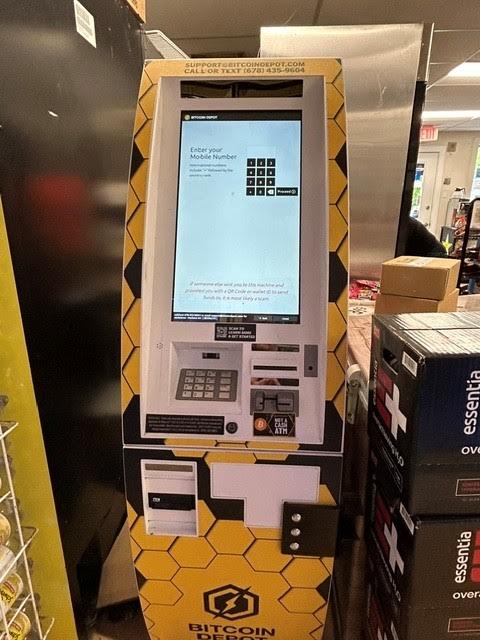 The type of machine Middleboro and Lakeville police are looking to ban. Submitted photo
 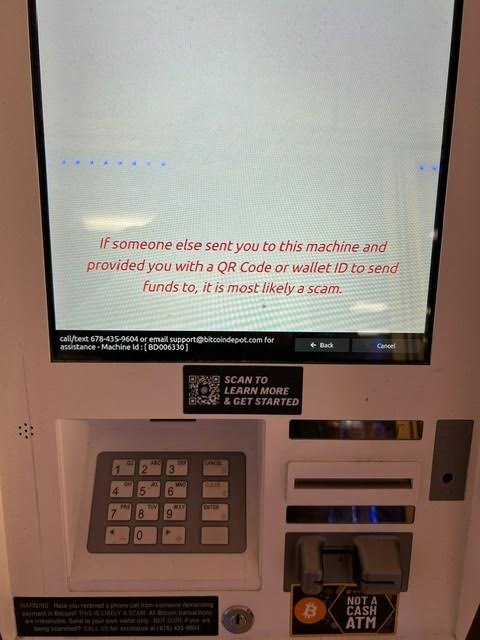 Many of the machines carry warnings but scammers still use them frequently, officials say. Submitted photo
 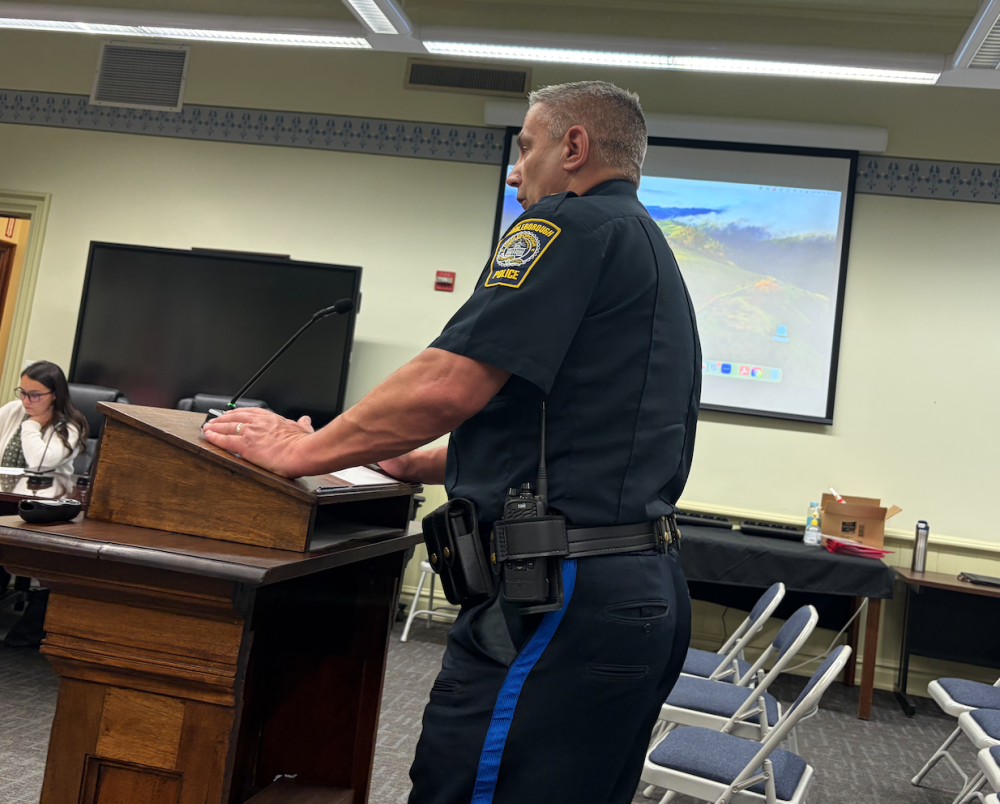 Middleboro Police Chief Robert Ferreira recently discussed the possible ban with the select board. File photo
Lakeville Police Chief Matthew Perkins, left, and Officer Jason Orlando with an image of a cryptocurrency machine. Photo by Sandy Quadros Bowles
The type of machine Middleboro and Lakeville police are looking to ban. Submitted photo
Many of the machines carry warnings but scammers still use them frequently, officials say. Submitted photo
Middleboro Police Chief Robert Ferreira recently discussed the possible ban with the select board. File photo
Middleboro Police Chief Robert Ferreira recently discussed the possible ban with the select board. File photo
Lakeville Police Chief Matthew Perkins, left, and Officer Jason Orlando with an image of a cryptocurrency machine. Photo by Sandy Quadros Bowles
The type of machine Middleboro and Lakeville police are looking to ban. Submitted photo
Many of the machines carry warnings but scammers still use them frequently, officials say. Submitted photo
Middleboro Police Chief Robert Ferreira recently discussed the possible ban with the select board. File photo
A 73-year-old Lakeville woman withdrew $20,000 in cash from her bank and was not answering calls from her family.
Concerned relatives contacted Lakeville Police. A quick investigation uncovered troubling news.
The woman had been told that her computer was infected by a virus. The only way to protect her money, she was told, was to withdraw it and deposit it into a Bitcoin ATM.
She was also told not to answer any phone calls, including those from her family.
In conjunction with Raynham Police, Lakeville officers discovered she was enroute to a market in Raynham. They intervened as she was on the phone with the scammer.
This transaction was stopped in time. But many others aren’t.
Which is why law enforcement in Middleboro and Lakeville are calling to ban the machines.
“They’re primarily used by scammers,’’ Lakeville Police Chief Matthew Perkins said.
Town Meeting voters in Middleboro June 1 and in Lakeville June 8 will be asked whether to ban the machines in town.
In Lakeville, there are no machines yet, but the article would ban any future placements.
Middleboro has about 10 to 15, many in convenience stores, Middleboro Police Chief Robert Ferreira has said.
Middleboro police have dealt with “quite a few cases’’ of fraud involving these machines, Ferreira said.
Legitimate cryptocurrency users, Perkins said, do not use these machines. They would likely go to a broker or a bank to complete the transaction.
For one thing, he said, these machines can charge “exorbitant’’ fees of 20 to 40 percent, Perkins said, far more than the traditional brokerage charges.
And once money is lost, recovery can be difficult, Perkins said. Outright seizure of the machines, which Perkins said was once the policy, is no longer allowed.
Recovery is possible, said Lakeville Police Officer Jason Orlando, who assists the White Collar Crime Task Force of the FBI. But the effort takes time, he said, and rarely results in the full amount of money lost being restored.
Scammers prey on emotions, Orlando said.
They may call and say a grandchild is in jail and needs bail immediately. Or money has been won in a sweepstakes but a fee must be paid to get it. Or, like the woman in Lakeville, a computer glitch has taken all an individual’s money and only a deposit in the Bitcoin machine can retrieve it.
Exact numbers of people affected by cryptocurrency scams can be hard to come by, Orlando said, because people can be hesitant to report their loss out of embarrassment.
The majority of scams target those over 60, a population less likely to be tech-savvy. Orlando said. “They prey on people that don’t understand technology.’’
If Middleboro voters approve the measure, Ferreira said, store owners will be ordered to remove the machines or face “steep fines.’’ Putting teeth into the order is needed, he said, to emphasize the importance of getting rid of the machines.
If Lakeville and Middleboro approve the ban, they will join other state communities, including Gloucester, Haverhill, Waltham and South Hadley, in prohibiting the machines.
In the meantime, officials urge anyone who receives a potential phone scam to avoid sharing personal information such as Social Security numbers or credit card details.
Don’t trust caller IDs, they warn. Scammers can make them look local.
If a caller claims to be from an agency, hang up and call back, using the number listed on the agency’s official website.
And take a deep breath before panicking. “People that are scammers prey on fear and confusion,’’ Orlando said.