











Conservation Commission, residents push back on ‘unnecessarily large’ warehouse proposal
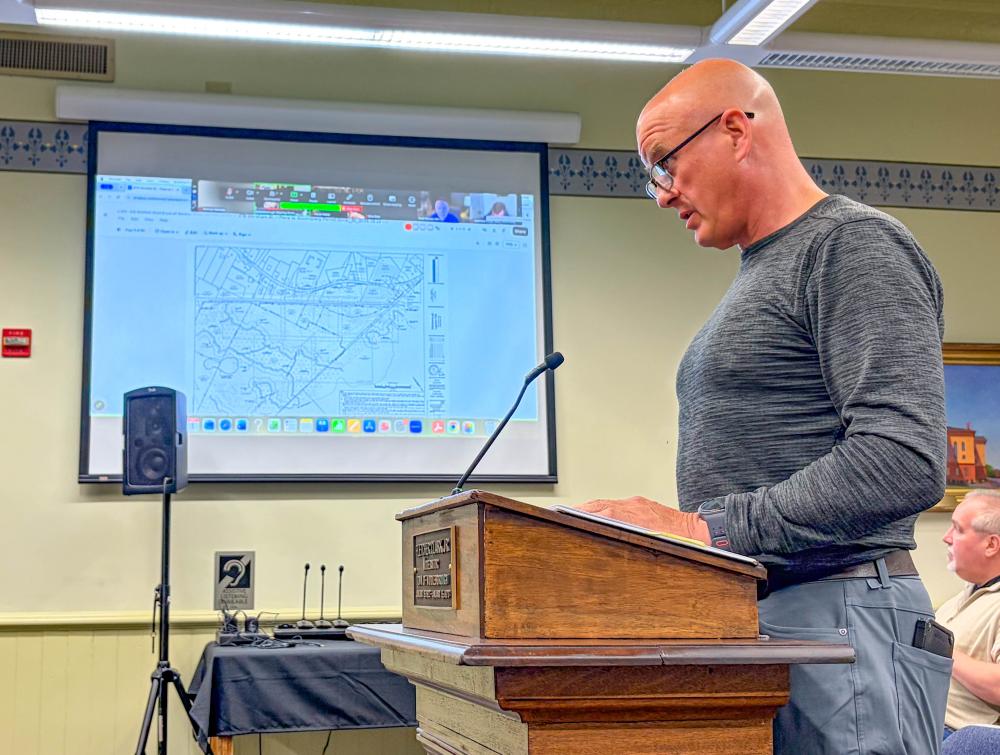 Michael Milanoski, who represents South Coast Logistics Park LLC, speaks at an Oct. 2 Conservation Committee meeting. Photo by Christian Uva
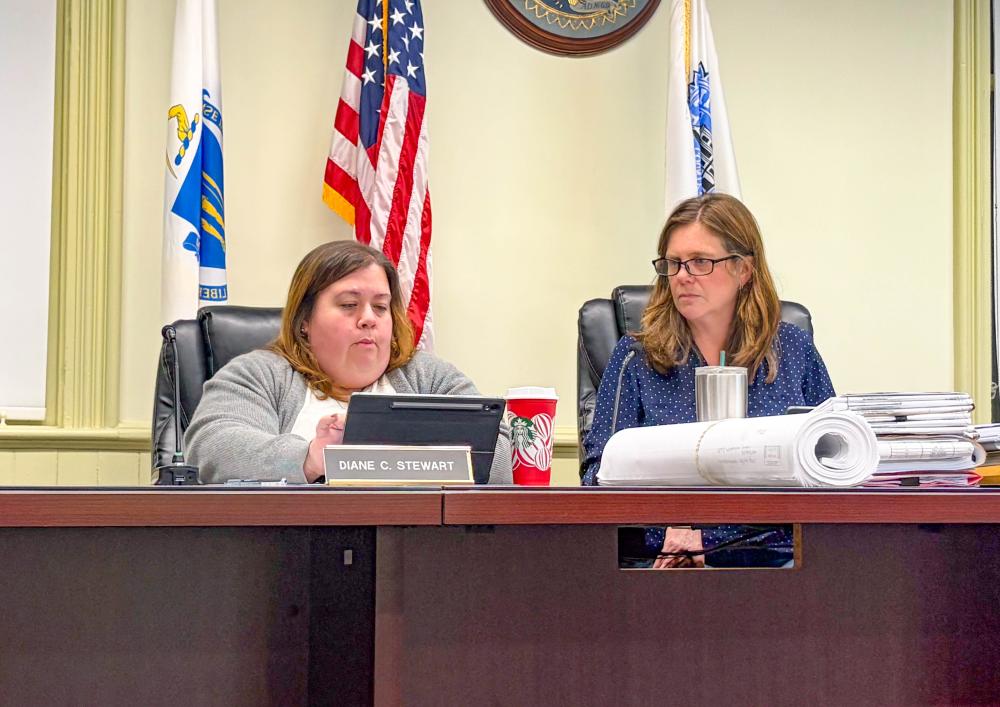 Conservation Commission member Diane Stewart, left, said the project would "destroy" 3,000 square feet of wetlands. Photo by Christian Uva
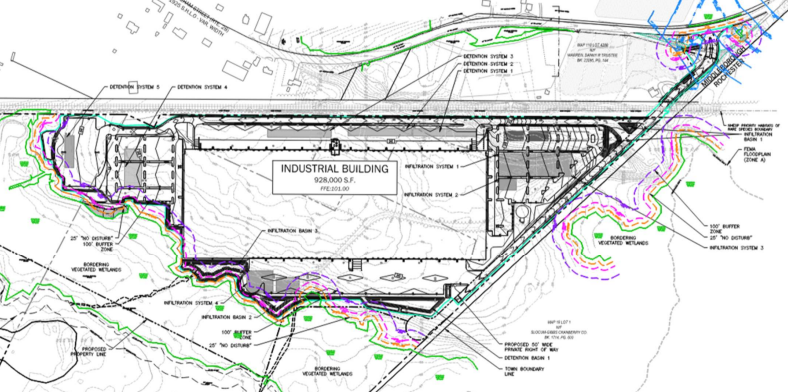 A diagram showing the scale of the proposed warehouse. Photo source: Middleboro Conservation Commission
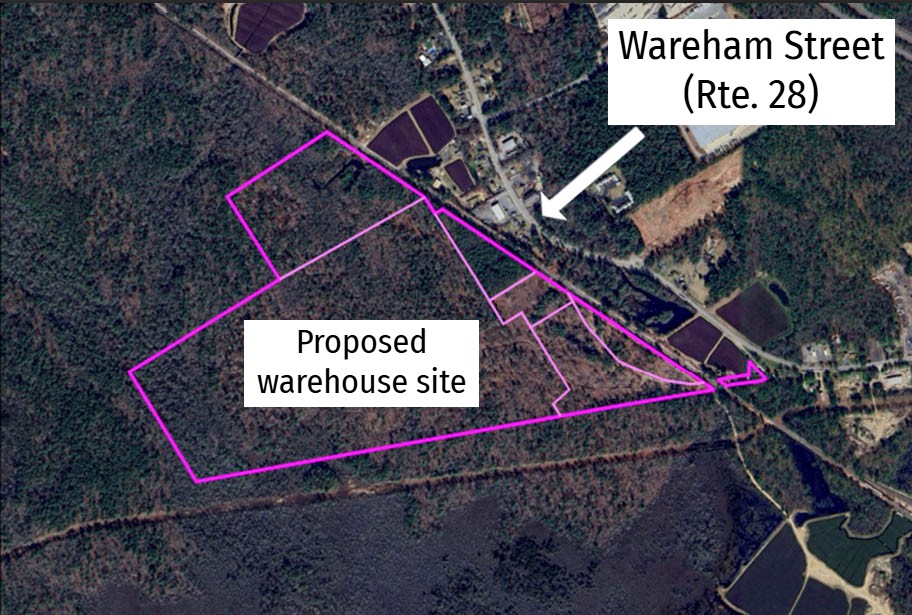 This map shows where the proposed warehouse would go in relation to Wareham Street. Photo source: Middleboro Conservation Commission
Michael Milanoski, who represents South Coast Logistics Park LLC, speaks at an Oct. 2 Conservation Committee meeting. Photo by Christian Uva
Conservation Commission member Diane Stewart, left, said the project would "destroy" 3,000 square feet of wetlands. Photo by Christian Uva
A diagram showing the scale of the proposed warehouse. Photo source: Middleboro Conservation Commission
This map shows where the proposed warehouse would go in relation to Wareham Street. Photo source: Middleboro Conservation Commission
This map shows where the proposed warehouse would go in relation to Wareham Street. Photo source: Middleboro Conservation Commission
Michael Milanoski, who represents South Coast Logistics Park LLC, speaks at an Oct. 2 Conservation Committee meeting. Photo by Christian Uva
Conservation Commission member Diane Stewart, left, said the project would "destroy" 3,000 square feet of wetlands. Photo by Christian Uva
A diagram showing the scale of the proposed warehouse. Photo source: Middleboro Conservation Commission
This map shows where the proposed warehouse would go in relation to Wareham Street. Photo source: Middleboro Conservation Commission
MIDDLEBORO — Tom Fitzgerald operates 75 acres of cranberry bogs for a living. These bogs sit on Wareham Street near the Rochester border.
A developer wants to build a 928,000-square-foot warehouse only a few hundred feet away from his bogs.
Fitzgerald said that this project could block water from flowing toward his bogs. “If all that water gets pushed somewhere else, I lose the water to work my bogs, irrigate my bogs, flood my bogs and there goes my life,” he said. “Some big things need to be addressed.”
Fitzgerald was one of many residents and Conservation Commission members who spoke out against the warehouse project at the Oct. 1 Conservation Commission meeting. Many critiqued the project’s size and how much it would impact the surrounding nature and wetlands. They cited concerns about the effects on stormwater runoff, pollution in the Sippican River and the nearby habitat for a protected species.
The warehouse, located at 678 Wareham St. behind the train tracks, is being proposed by Maine businessman Peter Gerrity. Its planned size is comparable to major Amazon warehouses. Gerrity said in a 2024 interview that he wants it to become a major distribution center for Cape Cod.
There is no tenant currently lined up for the warehouse. Project engineer Matthew Costa of engineering firm Beals Associates Inc. said it would be a “shell building to attract potential tenants.”
Former Carver Town Administrator Michael Milanoski, who is representing South Coast Logistics Park LLC, said large projects like these are built “speculatively.” He said the goal is to attract “Fortune 100 companies that need facilities like this.”
The scale of the project unnerved some at the meeting. Conservation Commission member Keri Gallagher said that the project was “unnecessarily large” and questioned why it had to be 928,000 square feet, which is the equivalent of over 16 football fields.
“This project is totally out of scale, and it does not belong here,” said environmental lawyer Meg Sheehan of Plymouth.
As it stands, the project would sit directly next to or within the buffer zone for protected wetlands. One part of it would encroach on these wetlands, an area that Costa described as a “small little nub.”
Conservation Commission member Diane Stewart said the affected area, which is 3,000 square feet large, was not as small as the engineers made it out to be.
“I know you’re downplaying the amount of wetlands that are being destroyed,” she said. “But in the grand scheme of trying to protect wetlands and buffer zones, I don’t consider that minimal.”
Middleboro resident Joe Falconieri echoed those concerns. He said that efforts to conserve that particular area of wetlands by the state and the Buzzards Bay Coalition was “a big win for Middleboro.”
Costa said that the team would replicate twice the amount of wetlands that the warehouse would affect. He included a list of the trees and shrubs that would be planted on the property in these replication areas.
Arborist Brian Theibault said that the team should reassess the species that would be planted, as one of the trees on the list, the American elm, was not native and wouldn’t survive in the wetland area.
Conservation Agent Patricia Cassidy said that she left 41 comments on the project proposal. The major sticking point for her was the isolated land subject to flooding on the site. Under the Wetlands Protection Act, those pieces of land can’t be built on.
The project team said the Army Corps of Engineers reviewed the land and said it would be alright to build on it. Cassidy told the team they should get an independent peer review of the site to determine whether the land is an isolated wetland.
Cassidy also said that there should be a peer review about the effects that the project would have on stormwater runoff in the area. Milanoski said that there is “ample storage capacity” for stormwater runoff built into the plan.
A planned access road would run through the Sippican River riverfront area. A letter submitted by the Buzzards Bay Coalition, which owns conservation land near the project site, said that this would cause an increase in stormwater runoff and downstream pollution.
The letter also noted that the land is a habitat for the eastern box turtle, which is a species of special concern in Massachusetts.
Milanoski said that the team is “addressing” the issue and coming up with a mitigation plan, but that it will not stop development.
The Conservation Commission is currently searching for an independent reviewer to assess the project’s impacts on stormwater runoff. The reviewer will be selected at a future meeting.