











Middleboro man arrested in $1.5 million deed fraud, money laundering
MIDDLEBORO -- A Middleboro man was one of three people charged in a multi-state scheme to defraud property owners by impersonating them, selling their land and laundering the proceeds of the deed fraud scheme, federal law officials allege.
Kyon James, 44, of Middleboro, was charged with money laundering conspiracy.
The other two charged were Moshe Levi, 57, of Carrollton, Texas, who was charged with wire fraud conspiracy and money laundering conspiracy, and Bradley Beauge, 41, of Somerset, N.J., who was charged with money laundering conspiracy.
The three and other individuals allegedly shared in illegal proceeds of about $1.5 million since about June 2023, according to charging documents.
They were arrested on July 16. James was released on conditions following an initial appearance in federal court in Boston later that day
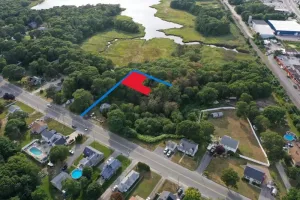
According to the charging documents, the three executed a deed fraud scheme by identifying vacant and unencumbered real properties in Massachusetts, Georgia, Indiana and Tennessee that were owned by individuals who lived out of state. They allegedly established email and internet telephone accounts and obtained fake identifications, including driver’s licenses and passports, all in the names of the properties owners.
Using the fake identifications and accounts, they allegedly impersonated the owners of the properties in order to trick real estate professionals into listing and negotiating the sale of the properties and deeding the properties to unsuspecting buyers in exchange for payment.
They also allegedly conducted financial transactions involving the proceeds of the fraudulent sale of properties, including by check and wire transfer, through individual and corporate bank accounts that they and others controlled, with the intent to conceal and disguise the nature, the location, the source, the ownership and the control of the proceeds.
The charge of wire fraud conspiracy provides for a sentence of up to 20 years in prison, three years of supervised release and a fine of $250,000, or twice the gross gain or loss from the scheme, whichever is greater.
The charge of money laundering conspiracy provides for a sentence of up to 10 years in prison, three years of supervised release and a fine of $500,000 or twice the value of the financial transactions that were the object of the conspiracy.
United States Attorney Leah B. Foley and Ted E. Docks, Special Agent in Charge of the Federal Bureau of Investigation’s Boston Field Office, made the announcement. Assistant U.S. Attorney Seth B. Kosto, Chief of the Securities, Financial & Cyber Fraud Unit is prosecuting the case.