











Tax increases set as possible solution to Lakeville's $2.6 million budget gap
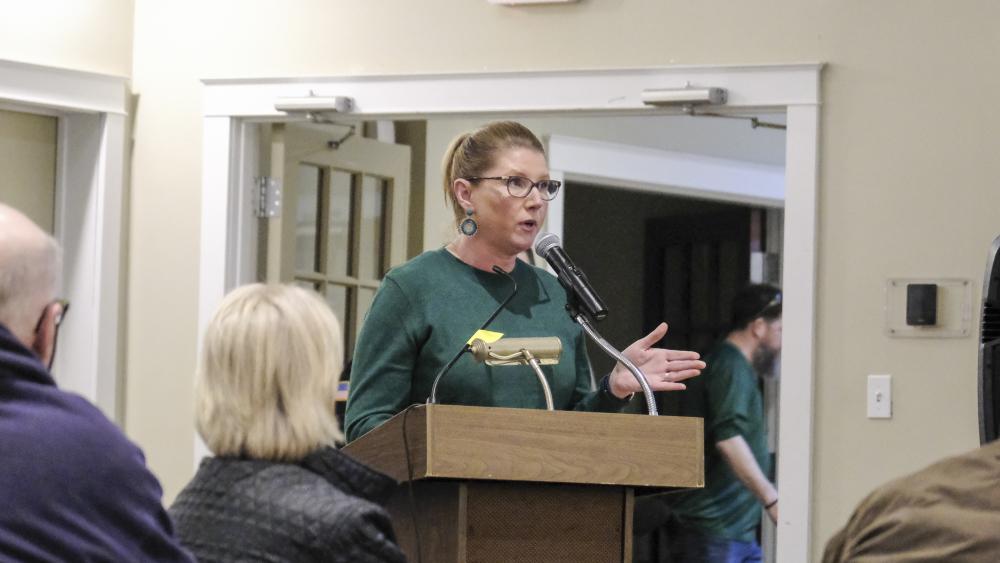 Eileen Newell, a teacher at Freetown Elementary, advocates for a tax override in Lakeville during a Tuesday, March 17, public meeting. Photos by Sam Tucker
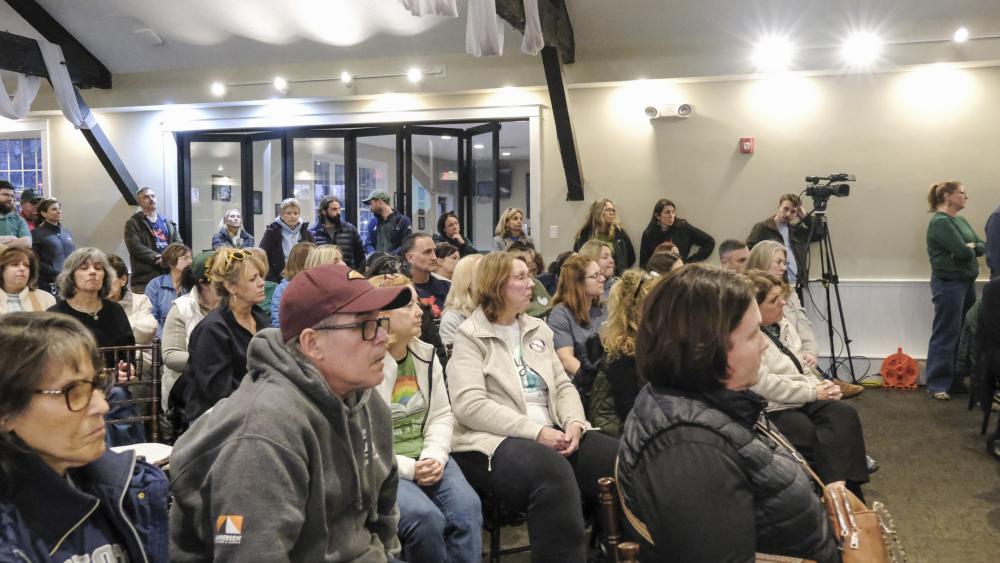 The Tuesday joint meeting with the Select Board and Finance Committee saw a large resident turnout.
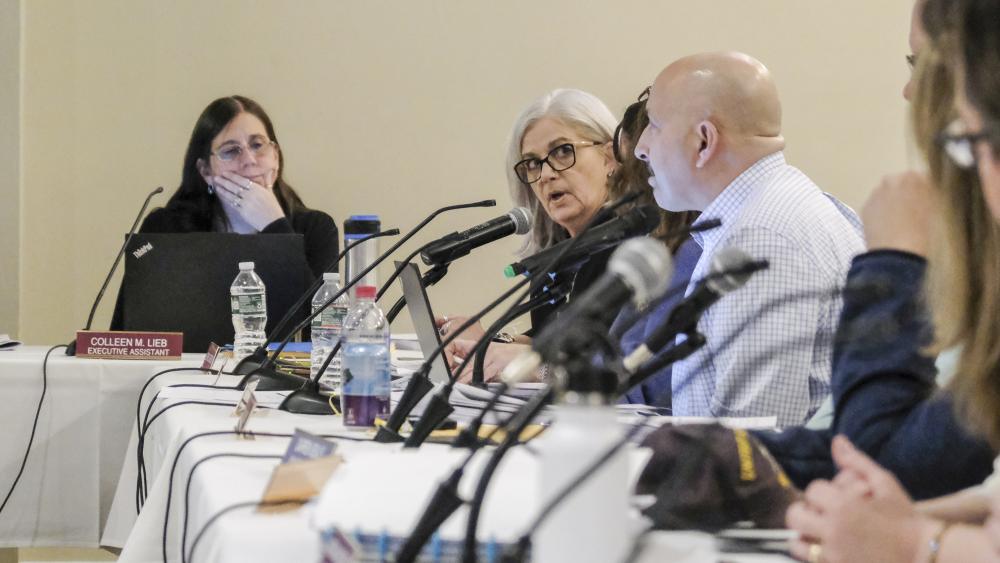 Select Board Member Lorraine Carboni discusses the override election. Officials voted to hold the election on May 19.
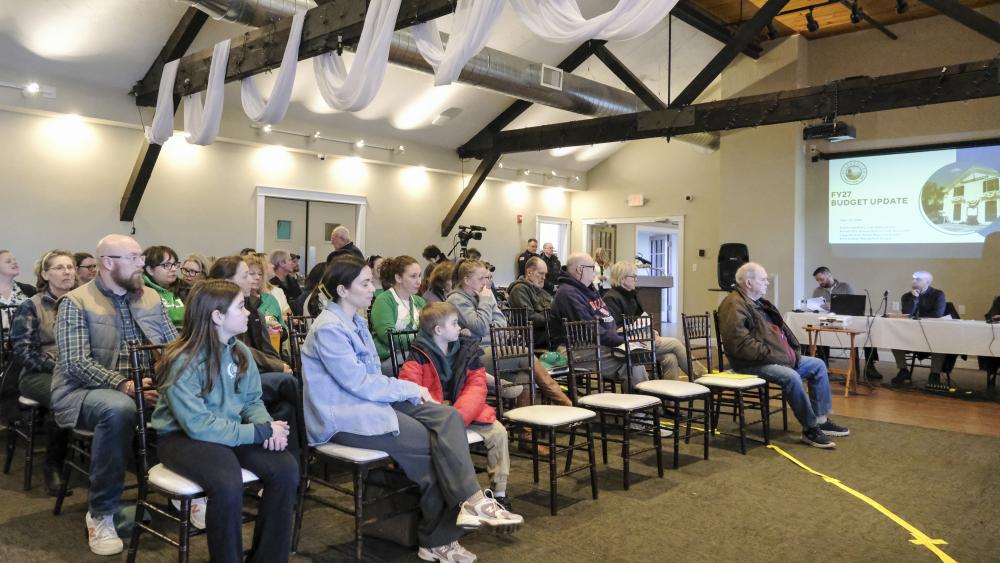 During the public comment portion of the meeting, the crowd cheered in support of residents who advocated for school funding.
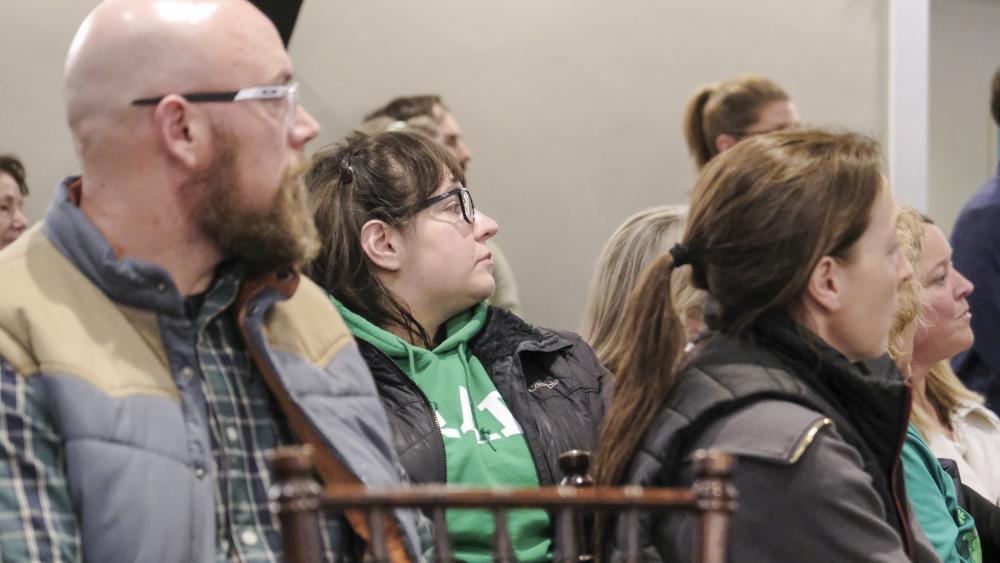 Residents look on and listen to others share their thoughts on the override solution. A majority of residents who spoke on Tuesday were in favor of the override.
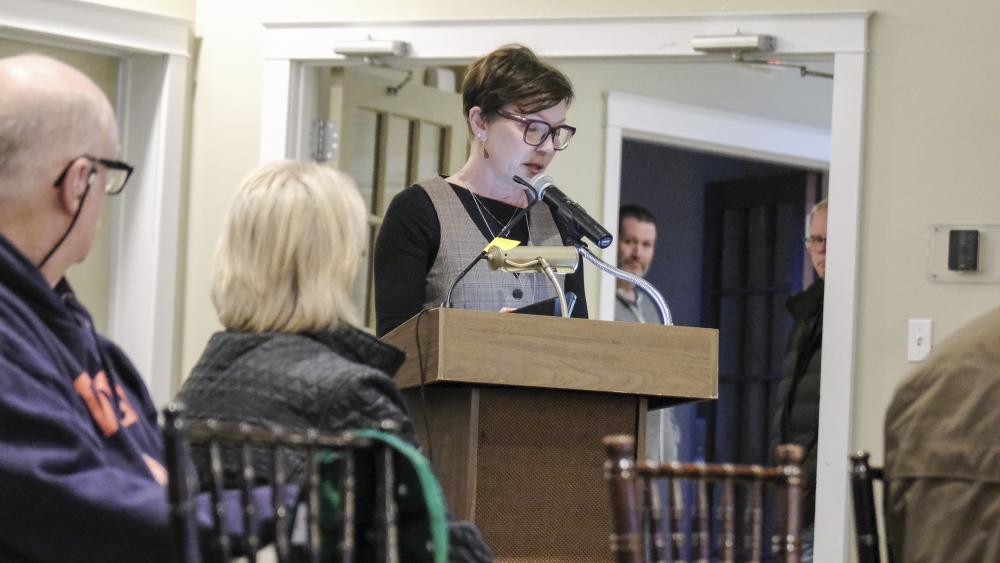 Council on Aging Director Lori Fahey said the cuts to programs at the Council on Aging would be "detrimental" to the senior community in town.
Eileen Newell, a teacher at Freetown Elementary, advocates for a tax override in Lakeville during a Tuesday, March 17, public meeting. Photos by Sam Tucker
The Tuesday joint meeting with the Select Board and Finance Committee saw a large resident turnout.
Select Board Member Lorraine Carboni discusses the override election. Officials voted to hold the election on May 19.
During the public comment portion of the meeting, the crowd cheered in support of residents who advocated for school funding.
Residents look on and listen to others share their thoughts on the override solution. A majority of residents who spoke on Tuesday were in favor of the override.
Council on Aging Director Lori Fahey said the cuts to programs at the Council on Aging would be "detrimental" to the senior community in town.
Council on Aging Director Lori Fahey said the cuts to programs at the Council on Aging would be "detrimental" to the senior community in town.
Eileen Newell, a teacher at Freetown Elementary, advocates for a tax override in Lakeville during a Tuesday, March 17, public meeting. Photos by Sam Tucker
The Tuesday joint meeting with the Select Board and Finance Committee saw a large resident turnout.
Select Board Member Lorraine Carboni discusses the override election. Officials voted to hold the election on May 19.
During the public comment portion of the meeting, the crowd cheered in support of residents who advocated for school funding.
Residents look on and listen to others share their thoughts on the override solution. A majority of residents who spoke on Tuesday were in favor of the override.
Council on Aging Director Lori Fahey said the cuts to programs at the Council on Aging would be "detrimental" to the senior community in town.
LAKEVILLE — Through a public meeting packed with attendees, roars of applause and resident input, Lakeville Town officials have decided to put a tax override to voters with an election date set for May 19.
The town will face a $2.6 million budget deficit next year that largely stems from increased fixed town costs from rises in health insurance and pensions, and a lack of state aid to fund schools. Residents came out in force Tuesday to push for public school funding and to advocate against cutting town services.
“We're facing structural issues that are just hard to climb out of,” Town Administrator Andrew Sukeforth said at the March 17 meeting.
On Tuesday, the Select Board and Finance Committee jointly approved an operational tax override amount of $4,915,700 with a three-year structure that would begin with next year’s budget — but will require voter approval.
The state-imposed Proposition 2 ½ sets a ceiling for the total annual revenue raised from property taxes. Towns can’t raise taxes more than 2.5% over the previous year’s limit — which includes tax revenues from new developments — without approval from voters.
Since raising taxes at the 2.5% rate would not cover the deficit, the town will ask voters for permission to permanently raise their taxes higher through a tax override election that will take place in May.
If the tax override is approved for next year’s budget, $2,615,700 would be raised from property taxes, which comes out to a yearly tax increase of $513.26 for the average valued household in Lakeville of $625,000.
In 2028, $1.3 million more would be raised and the final $1 million would be raised for the 2029 budget. By 2029, the scaled approach would result in a total tax increase of $970.18 from current rates.
Sukeforth said Lakeville got to the deficit due to stagnant state aid, stale economic growth, a lack of new revenue sources and rising costs for insurance, pensions and education costs.
“The biggest takeaway I have for everybody is that it’s not a school issue, it's not a town issue. There's just external problems,” he said.
A drop in state funding for schools and a “dramatic decrease” in new developments are major contributing factors, Sukeforth said. He said health insurance costs are the biggest problem with rising fixed costs. For next year’s budget, health insurance costs alone have increased more than $400,000.
The override — which a majority of residents who spoke at the meeting supported — is the town’s current solution for FreeLake schools to maintain, not expand, all services and prevent $2.6 million in cuts across the school district and town departments.
Although Select Board Chair Maureen Candito raised concern over the complexity of the three-year override plan, she and other officials agreed Sukeforth and Finance Director Mike Ellis prepared a worthwhile solution to Lakeville’s budget problem.
“Even though the thought process behind it is completely spot on, I think the execution behind it is going to be incredibly tricky,” Candito said.
Finance Committee Chair Darren Beals agreed and said, “whether you're for an override or against an override, it should be put to the people to decide that, but we do need to make it clear.”
Sukeforth said he’s willing to “meet anyone, anywhere” to get the message out, and an important part of his strategy is to schedule public outreach education meetings leading up to the election date.
If the override were to fail, about 50 positions at the FreeLake school district would be cut. Programs and services at the Council on Aging and library would be reduced, and seven full-time positions in the general government and public safety departments would also be cut among other reductions to services.
“Cuts have to come from somewhere. I know it's going to be potentially painful to certain departments, and I know schools would be greatly affected as well as town operations,” Sukeforth said.
Residents speak out
Lakeville town officials heard from numerous residents who spoke on the importance of funding FreeLake’s budget to maintain all services and the need to support programs at the Council on Aging.
Reaghan Jensen, a junior at Apponequet Regional High School, said she is enrolled in numerous high level courses and leads a variety of clubs and groups at the high school. She aired her fears of what cuts would mean for future students.
“These cuts would mean larger class sizes, fewer opportunities and the loss of staff that is crucial to our success,” she said, with the crowd applauding her comment.
Fellow junior at Apponequet, Colin McKay said students are “achieving strong results with limited resources, but there's a ceiling on what is possible.”
Eileen Newell, a teacher at Freetown Elementary said with programs at the Council on Aging and student services under threat, the time to act is now.
“The two most vulnerable audiences of your community are at risk right now,” Newell said. “I am pleading with you to please endorse this override in your community.”