











Lakeville voters reject requested increase to school budget
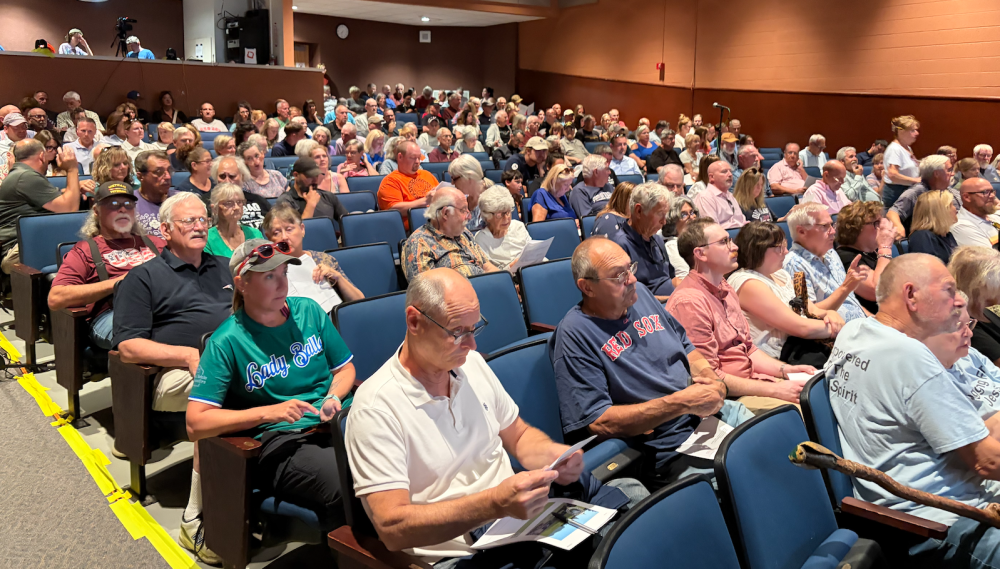 Voters filled the Apponequet Regional High School auditorium. Photos by Sandy Quadros Bowles
 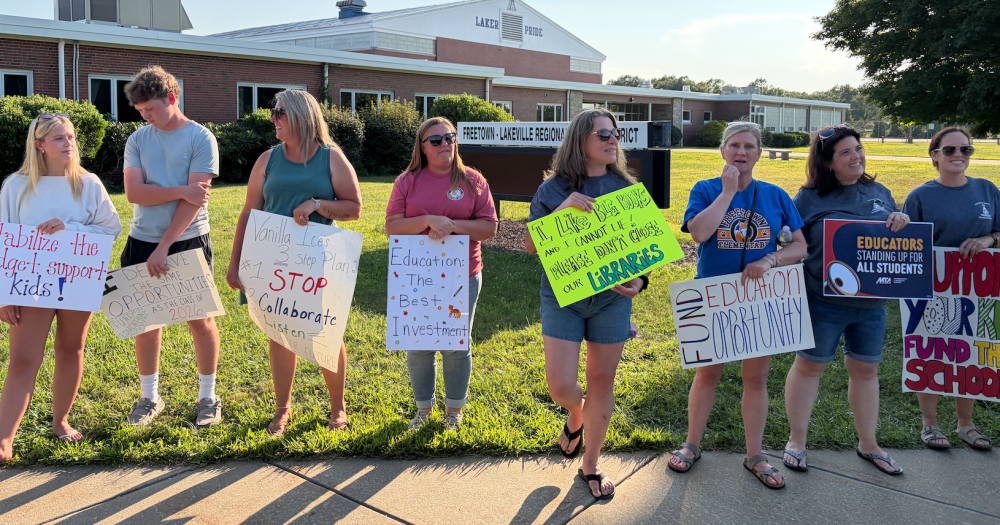 Education supporters lined the walkway into the school.
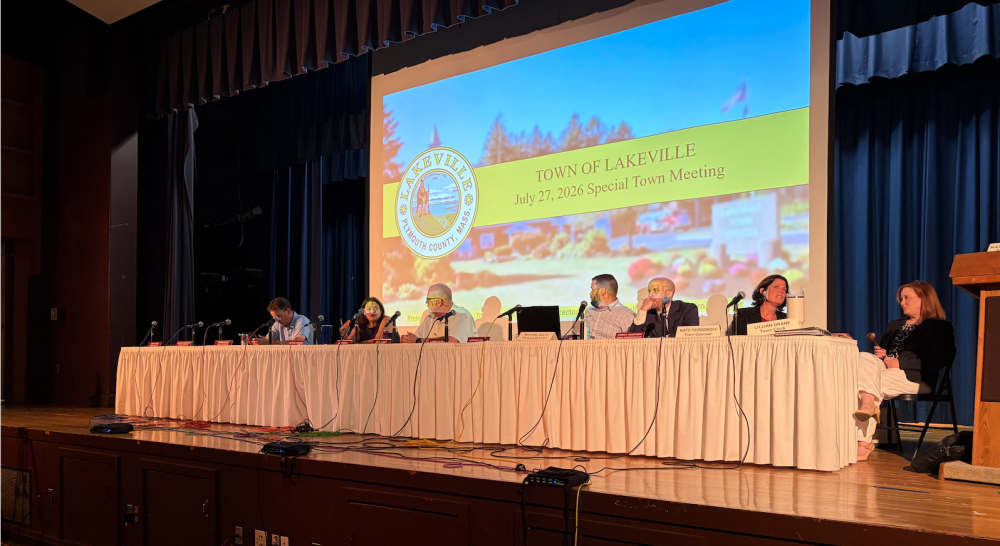 Members of the Select Board and Finance Committee sat on the stage.
Voters filled the Apponequet Regional High School auditorium. Photos by Sandy Quadros Bowles
Education supporters lined the walkway into the school.
Members of the Select Board and Finance Committee sat on the stage.
Members of the Select Board and Finance Committee sat on the stage.
Voters filled the Apponequet Regional High School auditorium. Photos by Sandy Quadros Bowles
Education supporters lined the walkway into the school.
Members of the Select Board and Finance Committee sat on the stage.
LAKEVILLE -- Lakeville voters have once again rejected the budget amount requested by the Freetown-Lakeville Regional School Committee.
Voters at the July 27 Special Town Meeting, held at Apponequet Regional High School, turned down a proposal to use $1.3 million from the town’s rainy day fund to make up the difference between the $350,000 voters previously approved toward the school budget and the $1.7 million the district was seeking.
The district had requested a budget payment of $19.3 million from Lakeville for the current budget, an increase of $1.7 million.
A total of 247 voters rejected the increase, while 154 supported it.
The regional school committee will now decide the next steps. The committee can either accept the reduced amount or call for a joint town meeting of Freetown and Lakeville voters.
They can call two such meetings. If the budget continues to be disapproved, a Department of Secondary and Elementary Education will step in Dec. 1 to decide on a figure.
The select board was mandated by the regional school committee to call a Special Town Meeting to revote the budget. Board membes proposed taking the money the committee was seeking out of the stabilization fund, the official name for the rainy day account.
Select Board members were required to come up with a proposal to fund the budget. Although they chose this as what Town Administrator Andrew Sukeforth described as the best of several bad options, both the select board and the finance committee recommended against approval.
Using one-time funds such as the rainy day account is bad financial practice, Sukeforth said, and could potentially drop the town’s bond rating, making borrowing more expensive.
Sukeforth said doing that would “make fiscal year 28,’’ which begins next July, “very, very bad.’’
Resident Brynna Donahue said that a positive vote “does not solve anything. One year is all this buys us.’’
She also questioned how the school money was benefitting the community, citing what she said were decreases in literacy rates.
Regional School Committee member Kathryn Trost stated that the town has not “created strategic opportunities to expand the tax base’’ that would lessen the financial burden on residential taxpayers.
“We’re on a trajectory to hit rock bottom,’’ she said. “We need to stop protecting a broken system.’’
Resident Bryan Enloe proposed other ways to provide the funds. He suggested using $275,000 in potential state aid; $150,000 from reserve funds that are set aside for emergencies; and $86,000 in capital funds.
All those options failed.