











Middleboro design firm takes education outside the classroom
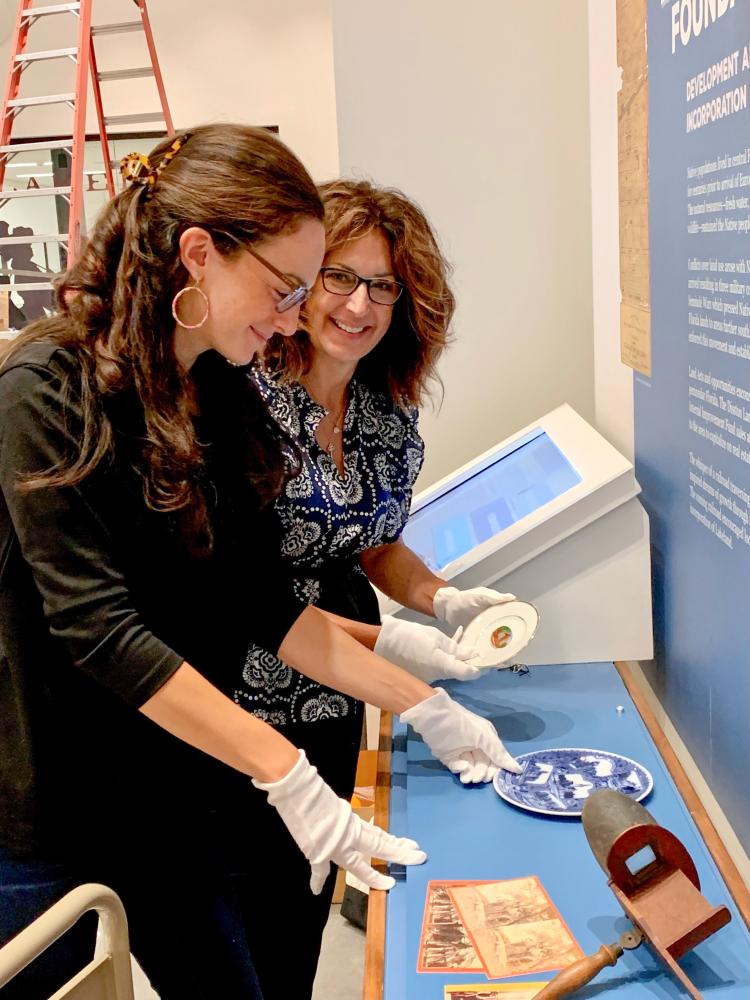 Ariel Hansen, left, and Larissa Hansen-Hallgren work together to assemble a new exhibit for the Lexington History Center in Lexington, Kentucky. Photo source: Larissa Hansen-Hallgren
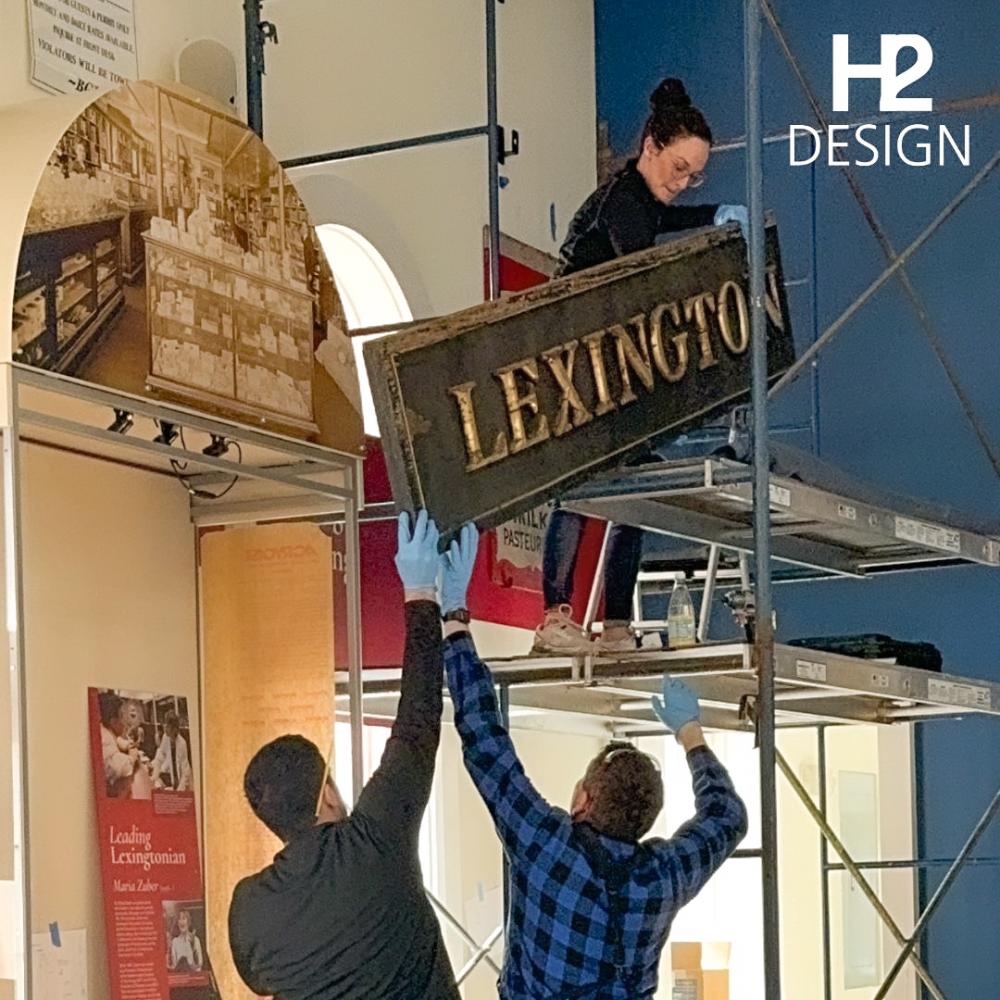 Hansen, center, installs a sign in the exhibit she and her mother designed.
 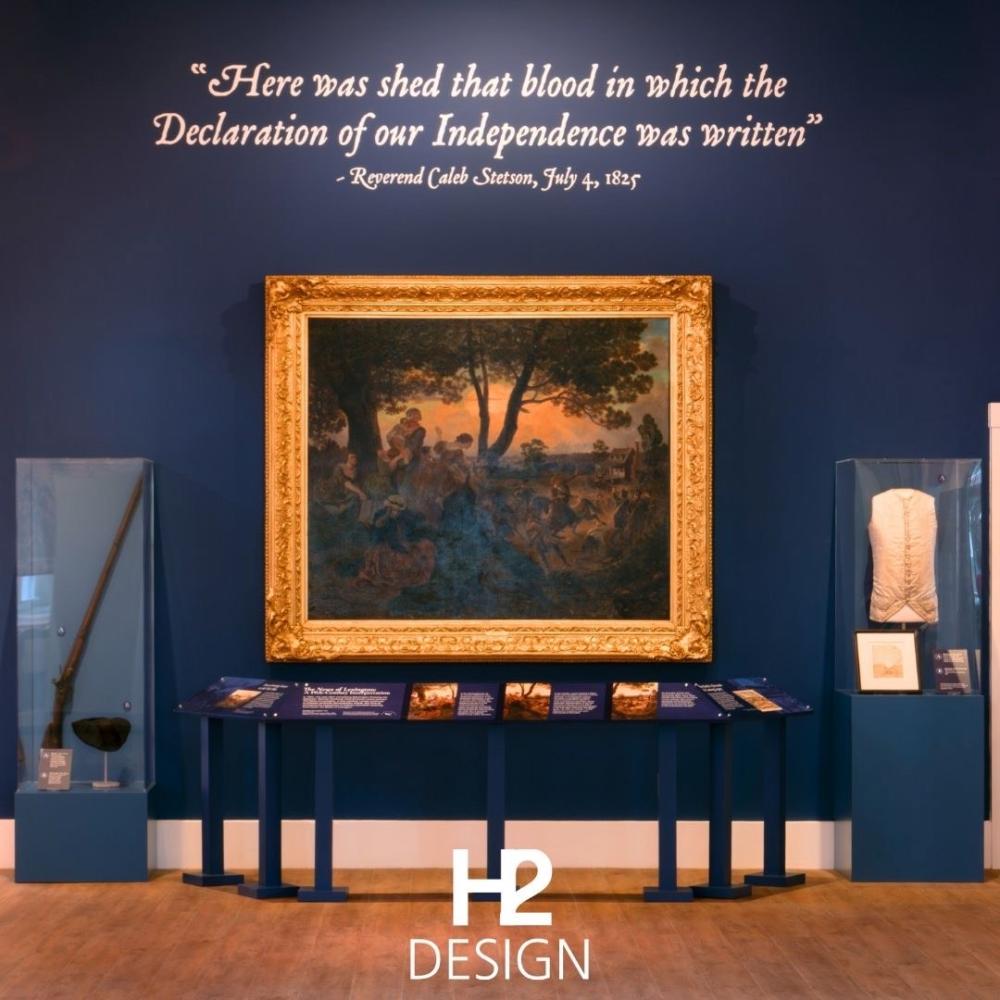 Each piece of the Lexington exhibit was designed and built in-house at the mother-daughter duo's Middleboro studio.
Ariel Hansen, left, and Larissa Hansen-Hallgren work together to assemble a new exhibit for the Lexington History Center in Lexington, Kentucky. Photo source: Larissa Hansen-Hallgren
Hansen, center, installs a sign in the exhibit she and her mother designed.
Each piece of the Lexington exhibit was designed and built in-house at the mother-daughter duo's Middleboro studio.
Each piece of the Lexington exhibit was designed and built in-house at the mother-daughter duo's Middleboro studio.
Ariel Hansen, left, and Larissa Hansen-Hallgren work together to assemble a new exhibit for the Lexington History Center in Lexington, Kentucky. Photo source: Larissa Hansen-Hallgren
Hansen, center, installs a sign in the exhibit she and her mother designed.
Each piece of the Lexington exhibit was designed and built in-house at the mother-daughter duo's Middleboro studio.
MIDDLEBORO — Even though her path looked different than her initial post-graduation plan, Larissa Hansen-Hallgren is still an educator at heart.
After earning a degree in science at Smith College in 1989, Hansen-Hallgren wanted to either enroll in medical school or become a teacher. She took a year to decide, and accepted a job in the meantime at Joseph A. Wetzel Associates, a now defunct museum design firm. She stayed until the firm dissolved in 1998, then began her own small business. Along the way, she also took a job teaching eighth-grade science at John T. Nichols Middle School.
While she said she loved everything about teaching, she started long after college and wouldn’t be eligible for raises in the timeline she needed them.
She had also already found success as a designer, and decided to focus her career on it.
For Hansen-Hallgren, designing museums and exhibits is still a chance to flex her teacher muscles at places such as the Newport Historical Society in Rhode Island and Olympia National Park in Washington.
“I don’t want to be called just to make pretty graphics or to put beautiful colors on the wall,” she said. “I want to be sure that I’m really drawing from my educational skillset, and I think time in the classroom actually helped me refine how I think about education in a museum.”
The Middleboro native co-owns H2 Design Studio, the only woman-owned firm in the industry, specializing in designing and building museum and outdoor educational displays. She runs it alongside her daughter Ariel Hansen, which she said is the “greatest thing in the world.”
The two share a title, but Hansen said their roles are quite different.
She said she enjoys focusing on the aesthetics and details of each exhibit, and thinks a lot about how it will “feel” for visitors.
“To work specifically with my mom, I think we both really balance each other out on projects,” Hansen said. “Where I come into a project with a little bit different perspective, she has a true educational perspective”
Hansen-Hallgren said she has seen several changes in the business over the years, mainly in her firm’s location and clientele, but has always held firm to the business’s philosophy of ethics, honesty and transparency.
It was previously based out of Boston, and said she resented the long commute that felt like a “time suck.”
Now, she works and lives in Middleboro and is able to devote more time to community connections, such as her previous role on the Gas and Electric Department’s Board of Commissioners and current position as the Middleboro Historical Commission Chair.
“It’s been a cool full-circle experience to work in town, and I’m in a fortunate place and time in my career where I can find little bits of time to break off to do things I enjoy,” Hansen-Hallgren said. “It’s been really nice to be able to be more rooted in the community.”
Now that she’s working closer to home, she also tries to keep her clients local. While the firm has worked with museums in states as far as Washington, Texas and Florida, most of it is currently focused in the New England region.
She said this move makes it easier to build long-term relationships and tell compelling local stories.
The types of museums the mother-daughter duo now work with have also changed. At her previous firm and in the early years of the business, Hansen-Hallgren stayed with her undergraduate interest and designed mainly science displays.
Hansen doesn’t share her mother’s background in science, but said she enjoys learning more about the subjects they design for. She said she gets invested and excited about each new topic, and is always learning.
“At its core, what really makes me excited is finding a topic and making it digestible for the average person,” she said.
However, while many of these museums operate on large budgets, they hire one company to design the space and another to build the exhibits. That’s not how H2 operates.
Hansen-Hallgren said it is important to her that the company is involved in every step of the process, from brainstorming ideas to in-house fabrication to installing the final product.
“It’s all about managing the client’s expectations,” she said.
When the company is responsible for every part of the job, clients can get exactly what they want and trust it to make their vision a reality.
It is also a more cost-effective model.
That’s important to her, because the types of institutions hiring a design-build firm operate on smaller budgets. Hansen-Hallgren has shifted to working with smaller operations — mainly history museums — although she still occasionally designs displays for science museums.
She said she keeps a project’s budget in mind when working with clients, and believes it’s important not to push them to accept more expensive options when they can’t afford the initial cost or upkeep required.
“It’s important to dream with them the best possible solution that doesn’t break their budget, and I think it’s frankly unethical to try to push their budget so much because you want to be a bigger earner of a paycheck,” Hansen-Hallgren said.
This is especially important to her in a time when federal funds for museums are drying up after budget cuts. While she said she isn’t concerned for the business, which is doing well and booked into 2028, she is concerned for the museums.
She said people in the industry have shared concerns about losing grant funds along with pressure to change their content and messaging.
History has many sides and perspectives at play, she said, and it worries her to see some of those sides removed. She said she has seen this pressure on science museums as well, and is concerned about information about ecological change and human impact being removed.
“It worries me profoundly, and it’s both distressing and empowering because it makes me believe the work we do today is more important than ever,” Hansen-Hallgren said. “I feel really motivated to do my part, to do the best job we can with the museums that are doing the jobs that they are charged to do.”