











Volunteers weave willows to plant a living fence
 All of the volunteers work together to weave the whips onto the poles. Photos by Kat Sheridan
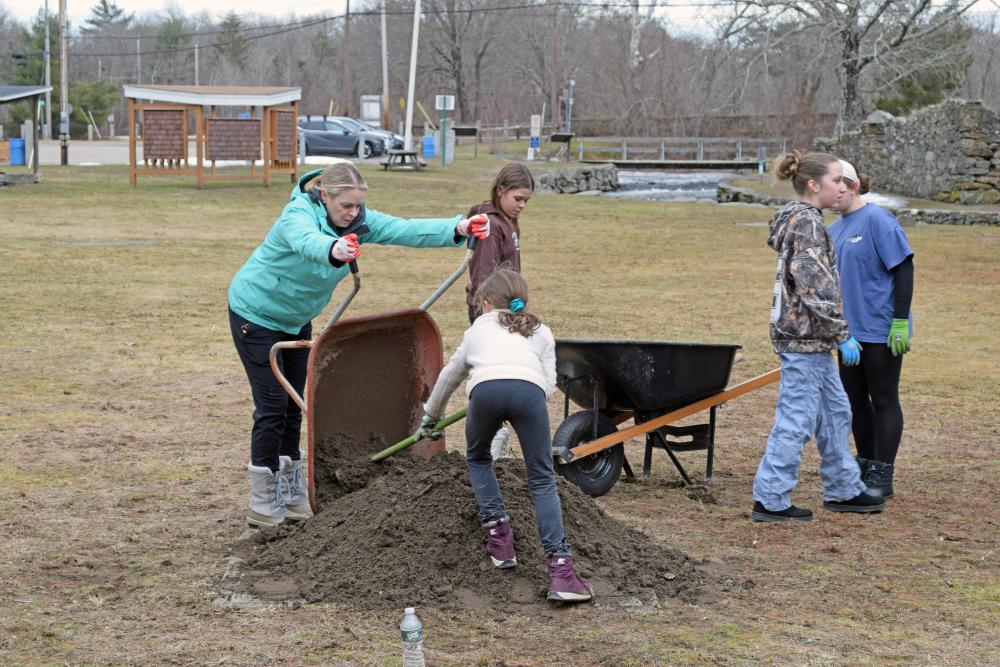 The girl scouts gather dirt to plant by the edge of the fence.
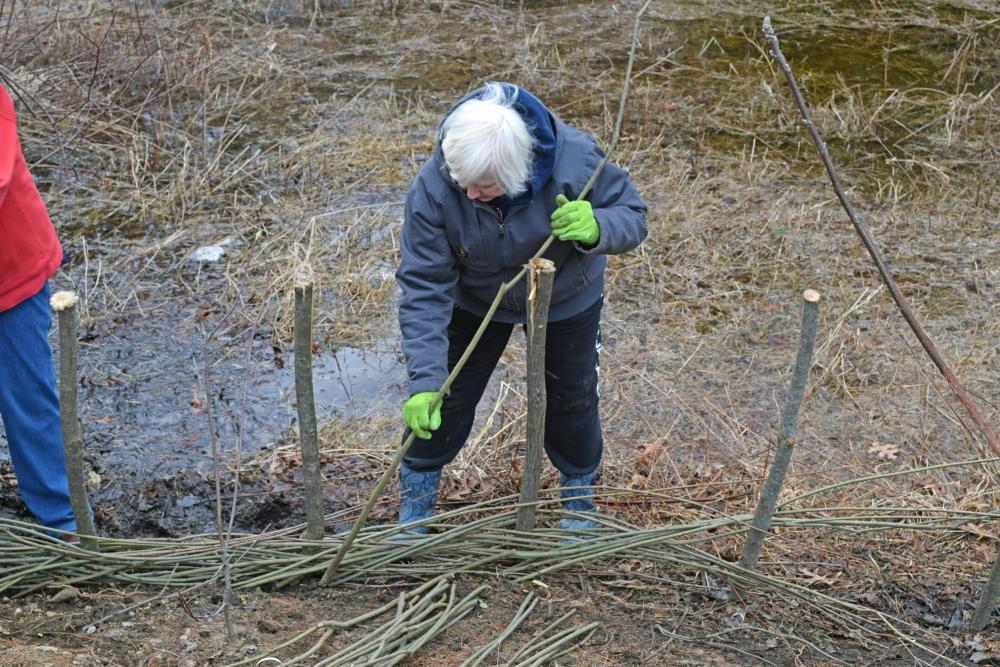 A volunteers weaves the whips.
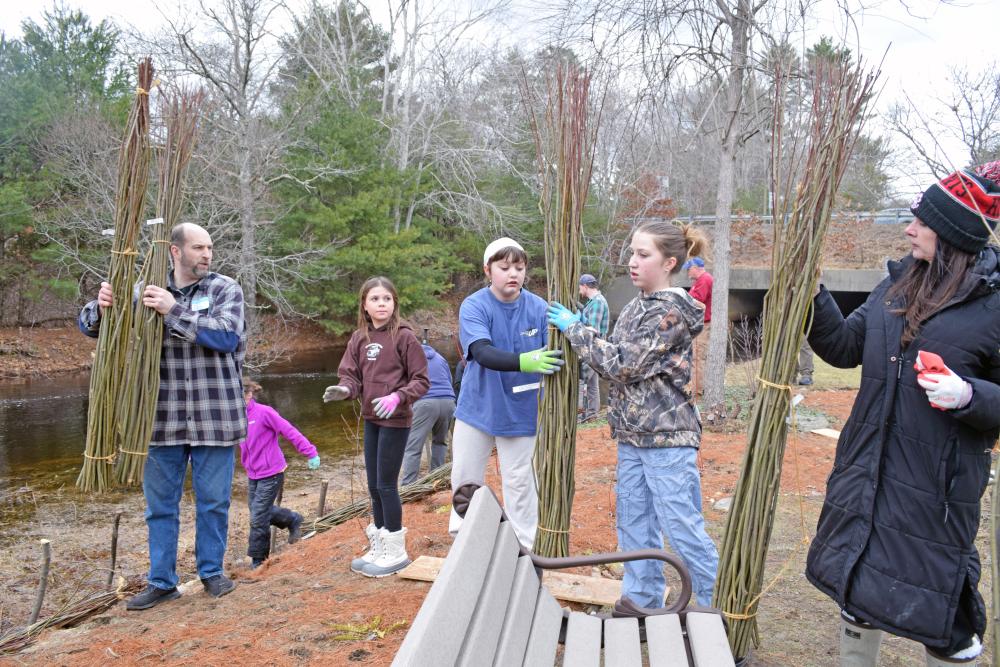 The girl scouts help pass the whips down to the volunteers.
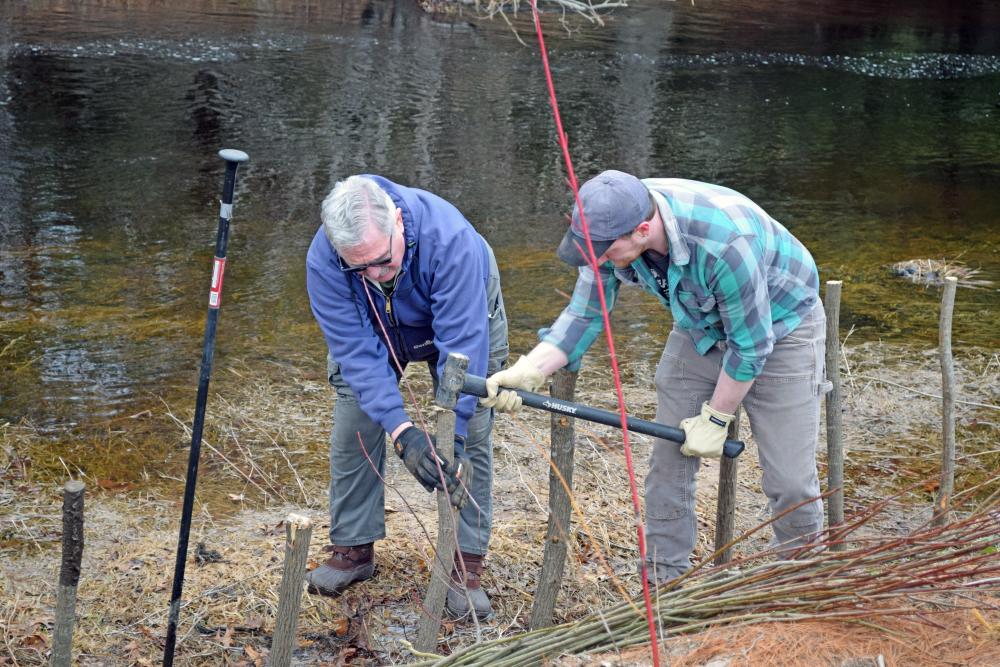 Volunteers work to hammer the posts into the ground.
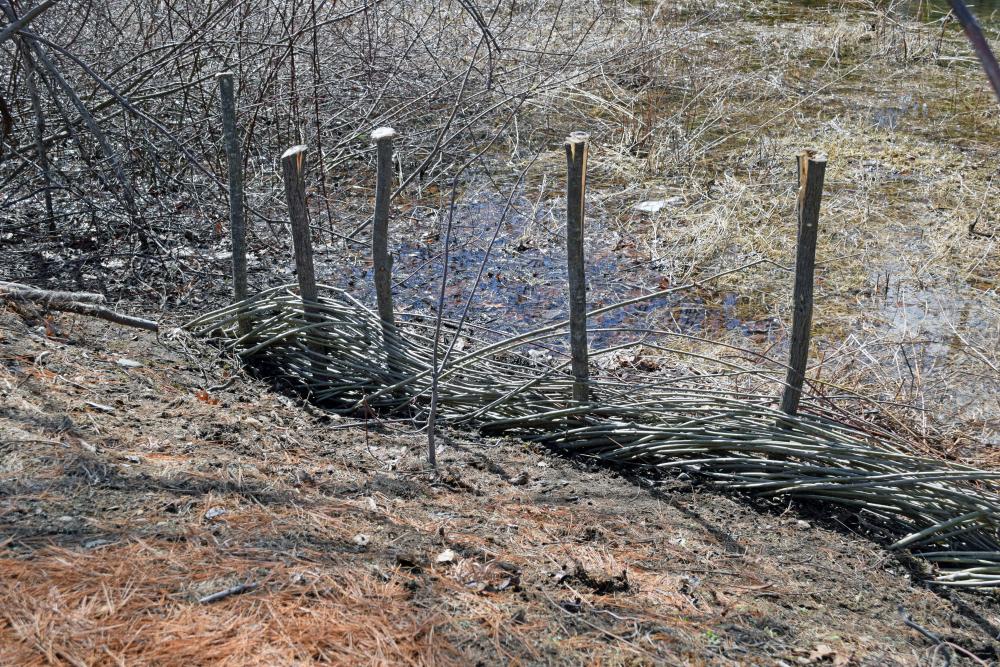 The living fence after having the whips woven in.
All of the volunteers work together to weave the whips onto the poles. Photos by Kat Sheridan
The girl scouts gather dirt to plant by the edge of the fence.
A volunteers weaves the whips.
The girl scouts help pass the whips down to the volunteers.
Volunteers work to hammer the posts into the ground.
The living fence after having the whips woven in.
The living fence after having the whips woven in.
All of the volunteers work together to weave the whips onto the poles. Photos by Kat Sheridan
The girl scouts gather dirt to plant by the edge of the fence.
A volunteers weaves the whips.
The girl scouts help pass the whips down to the volunteers.
Volunteers work to hammer the posts into the ground.
The living fence after having the whips woven in.
MIDDLEBORO — The Nemasket River got a makeover on Saturday, March 14 when volunteers from around town came to help construct a ‘living fence’ made from willows.
“With the living willow, it is a much more absorbing of the energy of the water, and so it allows for there to be kind of both the benefit of reducing erosion, but also then of the habitat that’s created from the use of the willow,” said Emily Vogler, who owns Commonplace Landscape and Planning.
Vogler’s company and the Southcoast Regional Planning and Economic Development District brought the project to the Middleboro Conservation Commission.
While this area of the river isn’t a pressing erosion concern, Vogler and members of the Southcoast Regional Planning and Economic Development District hope this can act as an inspiration for other areas or those who have rivers in their yards.
This is partially why the Nemasket River was chosen by the Conservation Commission, so that it is a public display of a living fence.
“This is a public project and also it’s a public space where people can come and see this as an example and maybe something they could use on their own property if they had erosion issues,” said Patricia (Tricia) Cassady, the Conservation Agent for Middleboro.
The living fence is made by hammering willow posts into the ground near the edge of the river, planting living willow branches, or “whips” and weaving it between the posts. After that they add jute fabric to the ground, and cover it with dirt and native seeds to stabilize the edge.
“We want to make the Nemasket River healthy and safe for the herring that come, and to help our community,” said 12-year-old girl scout Calleigh Connors.
A living fence like this is better for the environment than more common alternatives, such as riprap, a jagged stone used to prevent river erosion.
This project began about a year ago with getting all the correct permits from the Conservation Commission.
Once all the permits were gathered and where to build was decided, Vogler started by building a native garden where the park starts to slope down toward the river. After this, the invasive plants in the river were removed.
The fence was supposed to be built in the fall, but was postponed until the beginning of spring.
“We want to make a positive impact on the environment,” said Abby Needle, 12, a girl scout.
Once the fence is built, the work won’t be done. Nancy Connolly with the Massachusetts Master Gardeners Association will be continuing to upkeep the fence. She will be asking for volunteers.
“I want [the fence] to look nice so that people come and see how nice it looks, and then they’ll go home and do it in their own yard with native [plants,]” said Connolly.
Those in charge put out a call for volunteers, reaching out to both the broader community and troop leaders of the local girls and boys scouts.
The girl scouts troop 64979 came to help out with the project. They are working on earning a silver award, for forty hours of community service. They chose to focus on conserving the quality and cleaning the Nemasket River.
“We love working with the environment and being together,” said Kaylee Parker, age 12, a girl scout.
They adopted the last two miles of the river, but are working on the entire river. They are doing projects such as kayaking while testing the water quality, which is paid for through a state grant, learning about turtle nesting and community projects such as building the living willow fence.
“[We’re doing this to] help the Nemasket River and make it good for our community and their environment,” said 12-year-old girl scout Marley Ruthwicz.