











AI, affordability major topics as Auchincloss addresses luncheon
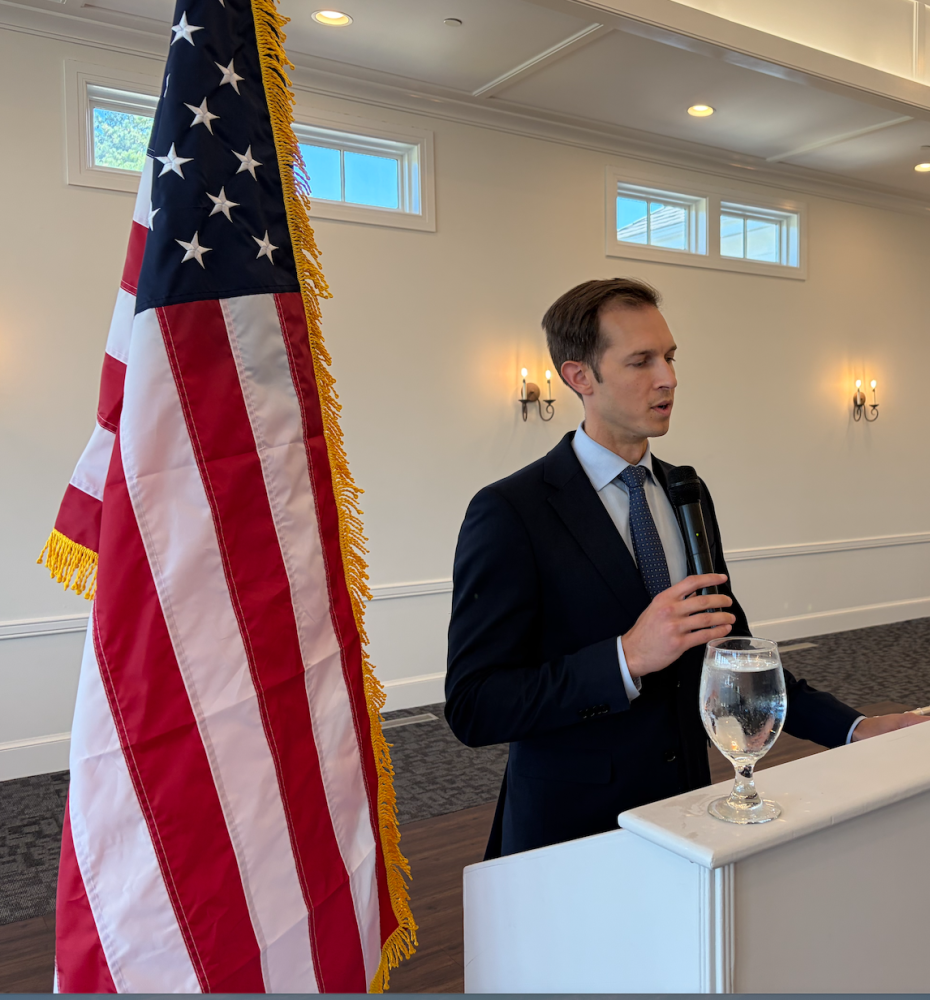 U.S. Rep Jake Auchincloss addresses the luncheon. Photos by Sandy Quadros Bowles
 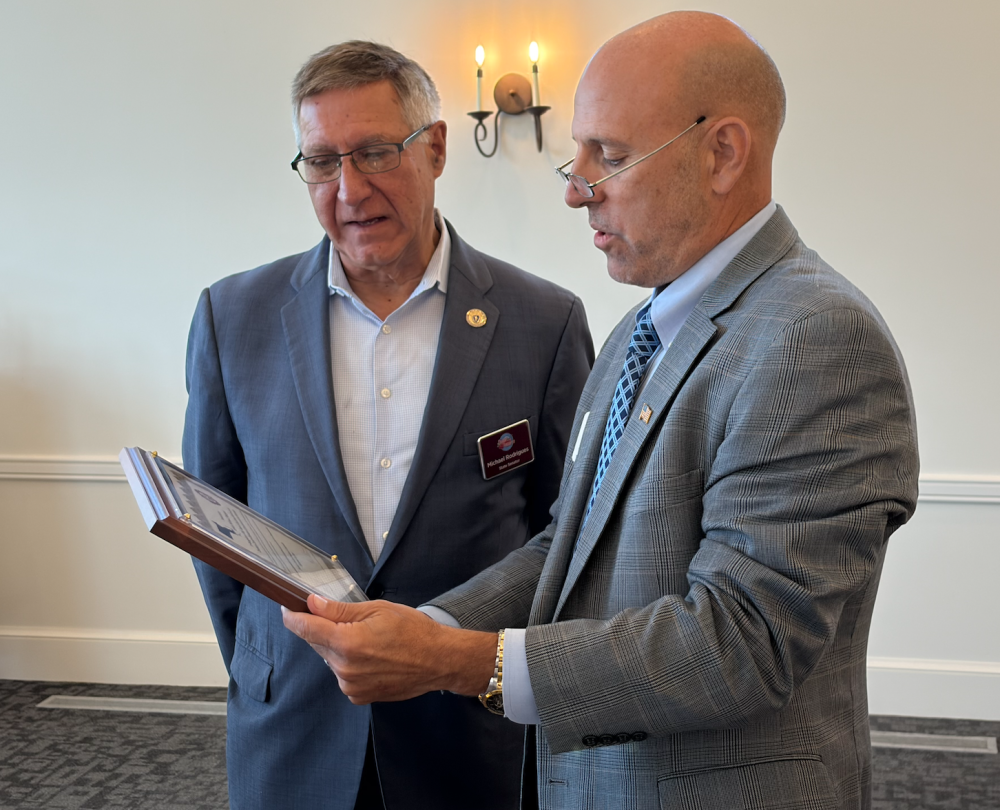 Cranberry Country Chamber of Commerce member John Olivieri, right, presents State Sen. Michael Rodrigues with a citation honoring him for his service to the district.
 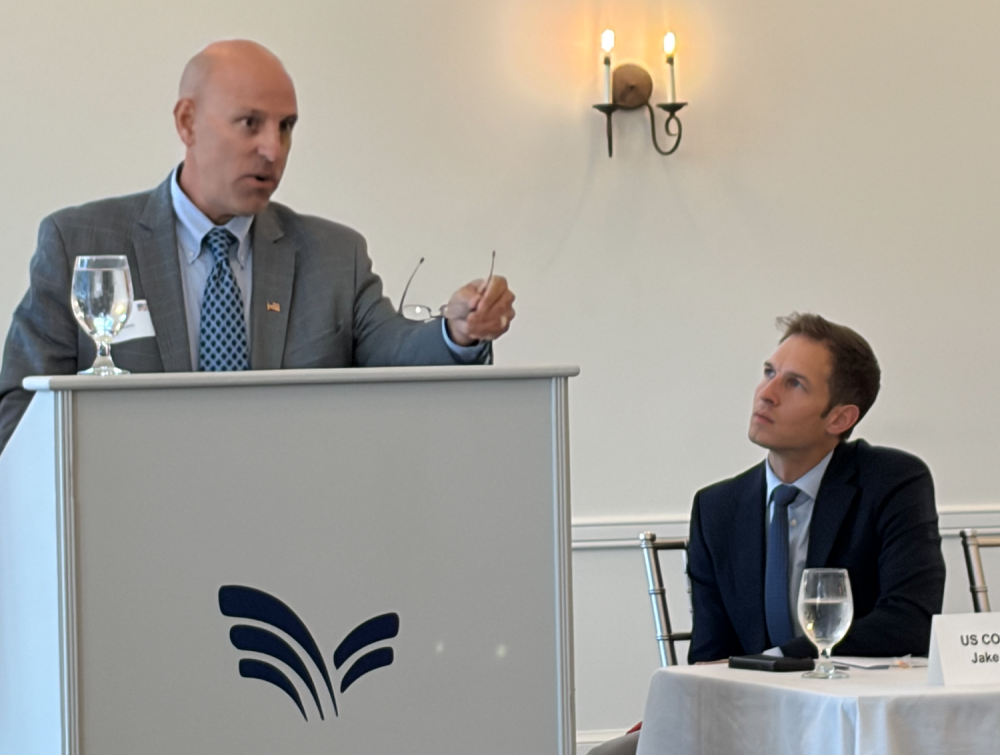 U.S. Rep. Jake Auchincloss listens as Cranberry Country Chamber of Commerce member John Olivieri speaks.
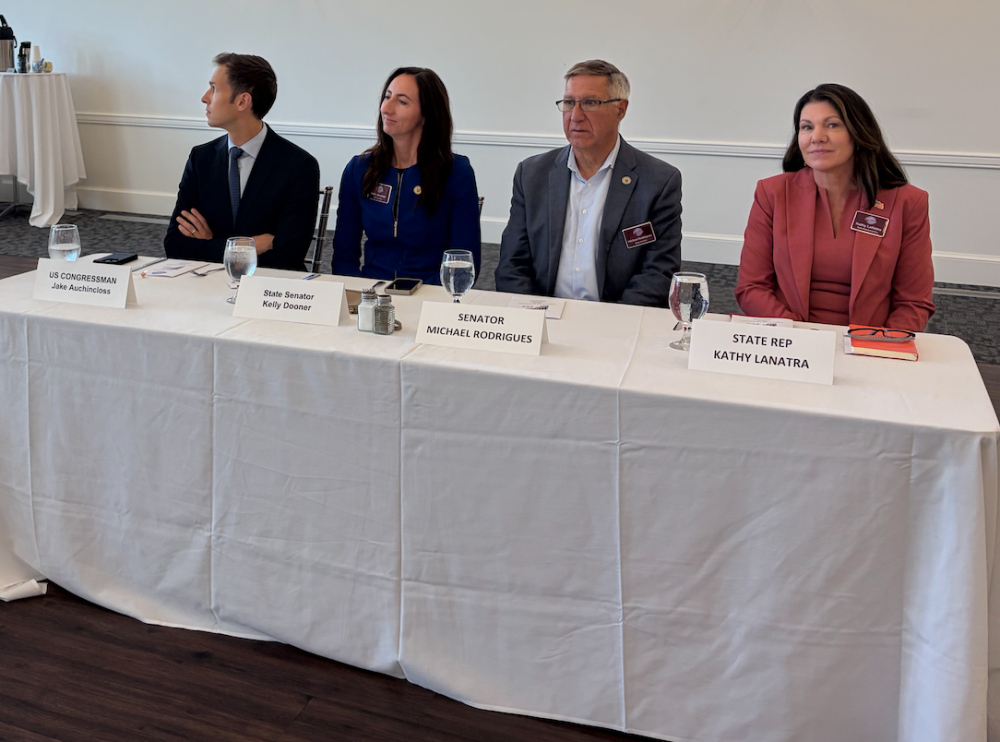 U.S. Rep. Jake Auchincloss, far left, with state legislators, from left, State Sen. Kelly Dooner. State Sen. Michael Rodrigues and State Rep. Kathy LaNatra.
U.S. Rep Jake Auchincloss addresses the luncheon. Photos by Sandy Quadros Bowles
Cranberry Country Chamber of Commerce member John Olivieri, right, presents State Sen. Michael Rodrigues with a citation honoring him for his service to the district.
U.S. Rep. Jake Auchincloss listens as Cranberry Country Chamber of Commerce member John Olivieri speaks.
U.S. Rep. Jake Auchincloss, far left, with state legislators, from left, State Sen. Kelly Dooner. State Sen. Michael Rodrigues and State Rep. Kathy LaNatra.
U.S. Rep. Jake Auchincloss, far left, with state legislators, from left, State Sen. Kelly Dooner. State Sen. Michael Rodrigues and State Rep. Kathy LaNatra.
U.S. Rep Jake Auchincloss addresses the luncheon. Photos by Sandy Quadros Bowles
Cranberry Country Chamber of Commerce member John Olivieri, right, presents State Sen. Michael Rodrigues with a citation honoring him for his service to the district.
U.S. Rep. Jake Auchincloss listens as Cranberry Country Chamber of Commerce member John Olivieri speaks.
U.S. Rep. Jake Auchincloss, far left, with state legislators, from left, State Sen. Kelly Dooner. State Sen. Michael Rodrigues and State Rep. Kathy LaNatra.
LAKEVILLE -- Young families that can no longer afford to live in the state where they were raised.
Energy bills that are straining and sometimes destroying household budgets
Local aid funding formulas that can lead to school cuts.
Artificial intelligence that raises questions about its future use.
Those were four of the hot topics discussed by local legislators and U.S. Rep. Jake Auchincloss during a legislative luncheon Sept. 18 hosted by the Cranberry Country Chamber of Commerce at LeBaron Hills Country Club in Lakeville.
Auchincloss, whose district includes Lakeville, was the keynote speaker. He was joined by State Sen. Kelly Dooner, State Rep. Kathy LaNatra and State Sen. Michael Rodrigues for a panel discussion on issues affecting the area.
Rodrigues was honored by the chamber for his legislative efforts on behalf of his district, which includes Lakeville and Rochester.
“The Southcoast has always been kind of overlooked,’’ said John Olivieri, chair of legislative committee of the chamber, in presenting the award. “Mike makes sure we are not forgotten down here.’’
In Lakeville, where Olivieri lives and chairs the Zoning Board, Rodrigues has provided support for removing invasive weeds from Long Pond, modernizing public safety and funding the Freetown Lakeville schools, Olivieri said.
The cost of living dominated much of the conversation.
LaNatra, whose district includes part of Middleboro, said said the number one concern she hears from her constituents is “affordability.’’
“We need housing,’’ LaNatra said. She noted that many young people from their mid-twenties to forties were educated in Massachusetts at “the best schools’’ but then leave the area because they can’t afford to live there.
“We’re losing their brilliant minds,’’ she said. “It’s ridiculous.’’
On local aid, and specifically Chapter 70 school funding, the allocation “is not equitable,’’ said Dooner, who represents Middleboro and Marion. Larger communities receive the bulk of the money while smaller towns get left behind, she said.
Rodrigues noted that a foundation review committee has been formed on the state level to look at how finances are allocated. “Suburban communities need to catch up,’’ he said. “There is money in the education world,’’ he said, but “the issue is how it’s distributed.’’
On the topic of artificial intelligence Auchincloss, who has been a prominent voice in the national conversation, urged Congress to look at a variety of aspects.
He proposed taxing Meta and Google, major players in the market, and using that money to “invest in human intelligence’’ through trade education and a tutoring program for students, among other uses that would benefit young people.
The state legislators agreed the issue should be tackled on the federal level.
In an effort to bring down energy costs, Massachusetts needs to be “all in’’ on all potential energy sources, including gas, electric, solar, wind and nuclear, Rodrigues said.
The utility companies are “invested in the things they do’’ because they create profits, he said. Eliminating some of the mandates and considering all energy types could help,, he said.
The need for more affordable housing could be addressed by making it easier to build modular or manufactured homes, Auchincloss said.
Reducing lot sizes for land not served by septic could allow for homes on smaller footprints that could be less expensive, he said.
The state legislators agreed that the partisan divide in national politics is not reflected on the statewide level and that legislators work well together, regardless of party affiliation.
“Beacon Hill does not operate like Capitol Hill,’’ Rodrigues said.